
SUI and Athletes
 Stress Urinary Incontinence (SUI) is defined as a complaint of involuntary loss of urine upon effort or physical exertion (eg, sport) or on sneezing and coughing and is often attributed to Pelvic Floor Muscle Dysfunction (PFMD). More and more, we are seeing that SUI as a major cause of reduced performance in female athletes. Why is this happening and how can we treat it?
In the general population, there are several risk factors contributing to SUI and PFMD including vaginal delivery, obesity, older age and there is level 1 evidence that pelvic floor muscle training should be the first line of treatment.1. Read our article ‘Treating Incontinence, Empowering Women’ for more information.
In the female athlete, many of these risk factors do not apply, and in fact, many athletes experiencing SUI are nulliparous. Currently, there are no randomised controlled trials looking at the effect of any treatment for SUI and PFMD in the female athlete population.
What do we know?
- The mean prevalence of UI in the female athlete is almost 50%.
- Majority (50-92%) of the athletes have never discussed the problem with anyone
- They are too embarrassed to discuss it.
- Unaware of treatment options.
- Don’t know who to tell and have never been asked!
- Many athletes report that UI affects their life negatively, and they consider UI a social or hygienic problem.
- 73.3% of athletes are unfamiliar with UI and the function of the PFM.2
- Two studies showed that 80-91% had not received any pelvic floor education or had never heard of PFM exercises.3,4
- Athletes are more likely to experience SUI with higher frequency and longer duration of training.
- 1 in 2 women stop performing an exercise secondary to pelvic floor symptoms.
- 1 in 3 nulliparous or younger women (18-25 yoa) stopped a form of exercise due to UI.
Theories regarding why SUI occurs in athletes
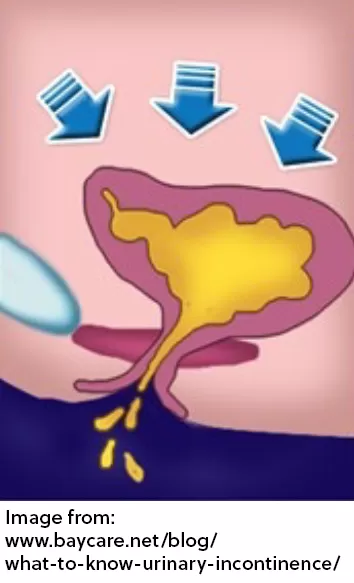 SUI occurs when the intravesical pressure is higher than the urethral closure pressure during physical exertion.
- Increased tone of PFM results in a reduced capacity to generate urethral closure:
- The implication of this is that athletes need to relax / reduce the PFM tone prior to strength training.
- This is different from weak PFM or incorrect timing of a PFM contraction as potentially once thought, however, this still needs to be addressed if found on assessment.5
- Deficiency in the urethral sphincters.
- Increase in urethral/fascial hypermobility.
- High intra-abdominal pressure (IAP) generated by the thorax above:
- Many athletes need to generate high IAP to create power and speed for performance eg abdominal bracing. It is hypothesised that the IAP is too high for the PFM to compensate.
- If we can’t change the forces or IAP, perhaps the use of a pessary may provide the additional urethral support required for the athlete to continue performing their chosen sport.5
- Poor force absorption through the foot and lower limb
- This potentially results in the PFM needing to absorb the ground reaction forces generated with foot strike/landing in high impact activities such as running and jumping.
- Eating disorder
- Hypoestrogenism and hormonal issues
- Caffeine and alcohol intake
- Constipation
- Void before training/competition
What can you do?
June 2022